Replacing a caliper hose? The small sealing parts decide whether it stays dry
Brake Parts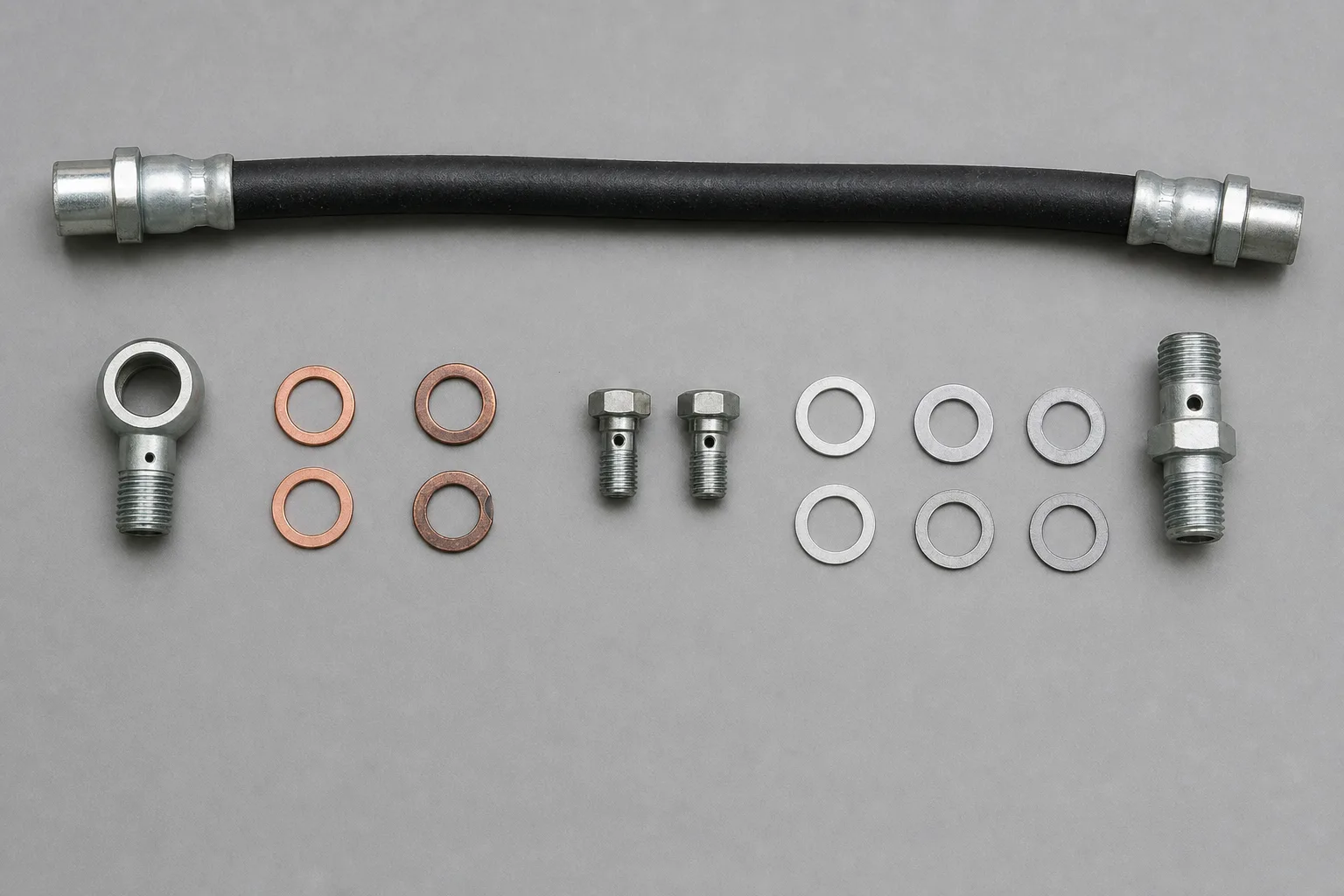
- Washer sized by inner diameter
- Copper crush washers are specified by the bolt's inner diameter, commonly 10 mm or 12 mm on metric applications. A washer one size up will seal on the flange and then extrude under line pressure.
- Copper hardens as it crushes
- The first torque cycle work-hardens copper and molds it to the exact surface it sat against. Reused washers are stiffer and thinner, which is why they weep on reinstallation.
- Aluminum is not interchangeable
- Some later vehicles specify aluminum sealing washers rather than copper, and the two crush at different rates. Match the material the manufacturer called for rather than substituting on availability.
The line item on a brake job usually reads caliper, hose, fluid, labor. What it rarely reads is two copper washers, one dust boot, one square-section piston seal, and a bleed screw with a fresh cap, and yet those four items are the ones that determine whether the repair is dry in six months. They cost a few dollars together. They are also the parts most often reused, guessed at, or supplied in an assortment box of mixed sizes that nobody measured. Checking them before the job starts takes about ten minutes.
Start with the washers, because they are the ones most often reused
A banjo fitting seals on two soft washers that are meant to deform against the bolt flange and the caliper face, filling the machining marks on both. Copper work-hardens as it crushes, so a washer that has already been torqued once is stiffer, thinner, and shaped to the surface it last sat against. Reinstalling it onto a slightly different surface is how a fitting weeps at the top of the banjo and drips down the hose in a way that looks like a caliper leak. Buy new ones, matched by inner diameter to the bolt, not by whatever falls out of the box.
Inner diameter is the number that matters, and it is worth measuring rather than assuming. Common metric banjo bolts run 10 mm and 12 mm, with a handful of Japanese applications at 10 mm on a fine thread and some European ones stepping up on the rear. A 12 mm washer on a 10 mm bolt will seal on the flange and then extrude sideways under pressure. Aluminum washers appear on some late-model cars and behave differently from copper: softer initially, less forgiving of reuse, and specified by the manufacturer for a reason. Match the material as well as the size.
What to check inside a rebuild kit before you open the caliper
A square-section piston seal does two jobs, sealing the bore and pulling the piston back a few thousandths when you release the pedal. That rollback is why a worn or wrong-profile seal shows up as a dragging brake and a hot wheel rather than a puddle. Lay the new seal next to the old one and check the cross-section: it should be square or very slightly trapezoidal, not round, and it should be the same width. An O-ring in a groove cut for a square seal will hold pressure and will not retract the piston, which is the failure that takes out a rotor.
The dust boot is the other item worth inspecting on arrival. It is not a seal against fluid, it is a seal against water and road salt getting behind the piston and pitting the bore, and its retaining ring or bonded metal lip has to seat fully in the caliper groove. Check that the kit includes the right retainer, that the rubber is pliable rather than glazed, and that the boot matches the piston diameter. Ethylene propylene compounds handle brake fluid; nitrile does not, and a cheap kit sometimes mixes the two.
Bleed screws, threads and torque
The bleed screw seals on its tapered seat, not on the threads, so a screw that will not stop weeping is usually seating badly rather than loose. Look at the cone under a light for a ring of corrosion or a nick from a previous socket slip. Torque figures for banjo bolts and bleed screws are published in the factory service information for the vehicle, and they are lower than most people guess, generally somewhere in the range of a firm hand on a small torque wrench rather than a breaker bar. Overtightening a banjo bolt splits the washer and distorts the bolt shoulder.
The National Highway Traffic Safety Administration oversees the federal motor vehicle safety standards that brake systems are built to, which is one reason the service manual specification is worth chasing down instead of working by feel. Thread pitch matters too. An M10x1.0 bleed screw and an M10x1.25 will both start, and only one will seat.
Where the assortment box helps and where it does not
A multipack of copper washers is genuinely useful for a shop that sees varied work, provided the sizes are labeled and the copper is soft rather than a plated substitute. What it will not give you is the aluminum washer a specific manufacturer specified, the crush washer with a raised sealing bead, or the sealing ring that is captive inside a fitting rather than loose on the bolt. Order those by application. The rest of the box earns its place on the shelf.
Ask the shop to list the small parts on the estimate. A dry fitting the first time is cheaper than a second bleed, and the request tends to tell you quickly how the work is going to be done.